The Gilded Symphony of Sentiment: How Crystal Anklets and Gemstone Tiaras Become the Silent Poets of Personal Expression
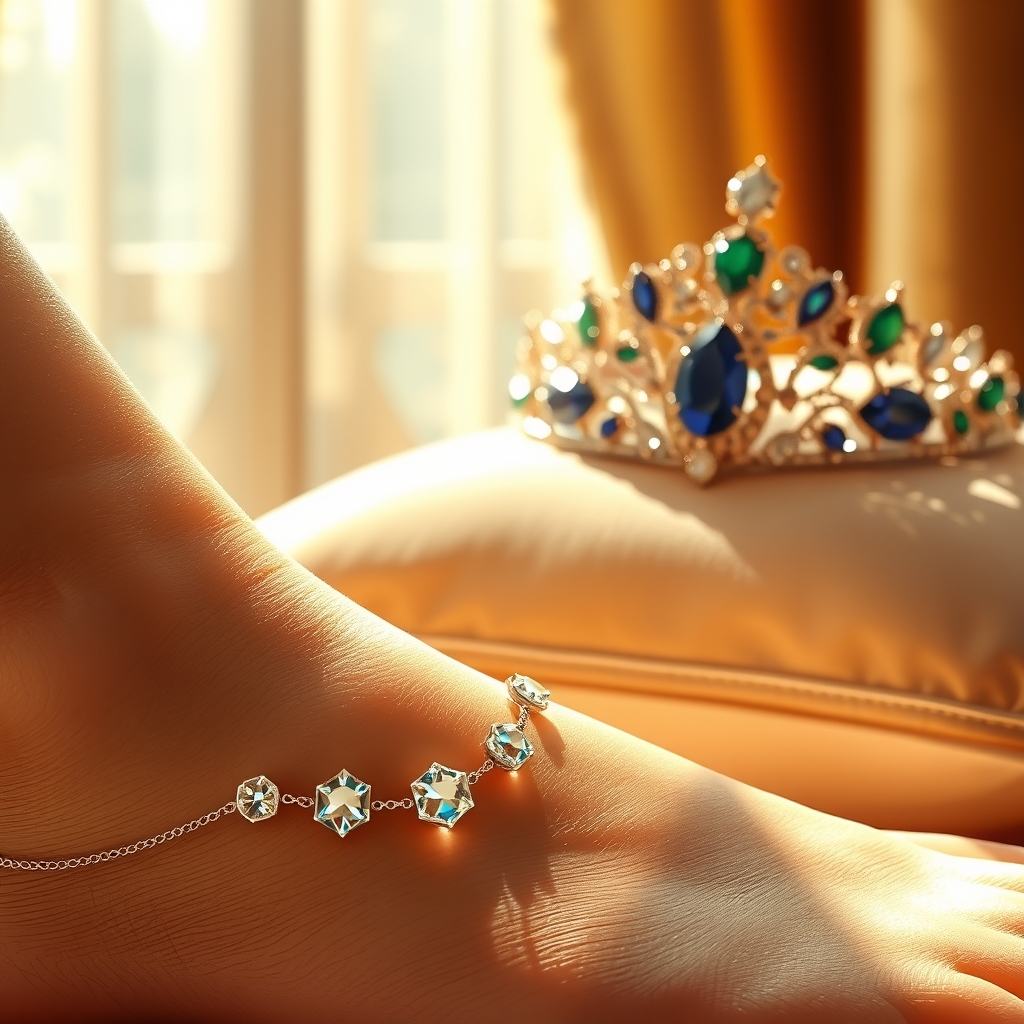
There exists a quiet magic in the way fine jewelry speaks without words, a language of light and shadow, of metal and gemstone, that transcends the boundaries of ordinary communication. It is a dialect of the soul, whispered through the delicate clink of a crystal anklet against skin or the regal poise of a gemstone tiara resting upon a brow. These pieces do not merely adorn; they narrate, they evoke, they transform the wearer into a living canvas of emotion and identity. To understand this alchemy is to recognize that jewelry is not just an accessory—it is an extension of the self, a silent poet that composes verses in gold, silver, and stone.
The Whisper of the Anklet: A Dance of Light and Movement
Few pieces of jewelry possess the ethereal quality of a crystal anklet. Worn close to the earth yet catching the light with every step, it is a piece that demands attention not through boldness, but through subtlety. The crystals, whether clear as morning dew or tinged with the soft hues of dawn, refract light in a way that feels almost mystical. They do not shout; they shimmer, a fleeting glow that hints at something deeper, something unseen. This is the power of the anklet—it turns movement into poetry, each step a stanza in an unwritten ode to grace.
Historically, anklets have been symbols of status, protection, and even rebellion. In ancient Egypt, they were worn by women of high rank, their delicate chains a testament to wealth and refinement. In South Asia, they have long been a part of bridal adornment, their jingle a melodic promise of joy and celebration. Today, the crystal anklet carries these legacies forward, but it also invites a modern interpretation—one of freedom, of playfulness, of a connection to the earth and the rhythms of life. It is a piece that refuses to be confined, much like the spirit of those who wear it.
The Tiara’s Crown: A Regal Declaration of Self
If the anklet is the whisper, then the gemstone tiara is the proclamation. Tiaras have long been associated with royalty, with power, with the kind of authority that commands attention without a word. Yet, in the hands of the modern wearer, the tiara becomes something more personal—a declaration of self-worth, a celebration of individuality, a crown not of inherited title, but of earned confidence. The gemstones, whether sapphires that mirror the night sky or emeralds that echo the lushness of forests, are not merely decorative; they are storytellers, each facet a chapter in the wearer’s journey.
The tiara’s history is one of transformation. Once reserved for queens and empresses, it has evolved into a symbol of personal sovereignty. Today, it is worn by brides on their wedding day, by artists on the red carpet, by women who refuse to be defined by convention. It is a piece that says, “I am not just present—I am regal. I am not just seen—I am remembered.” The gemstone tiara does not ask for permission to shine; it simply does, and in doing so, it elevates the wearer to a realm where elegance and empowerment are one and the same.
The Alchemy of Adornment: When Jewelry Becomes Art
What is it about jewelry that allows it to transcend its physical form and become something more? It is the alchemy of intention—the way a piece is chosen, worn, and cherished. A crystal anklet is not just a chain of stones; it is a promise to move through the world with grace, to let light follow you like a shadow. A gemstone tiara is not just a band of metal and gems; it is a crown for the modern queen, a reminder that power is not given but claimed.
This alchemy is not limited to the rare or the extravagant. It is present in the silver bracelet passed down through generations, in the pearl earrings worn on a first date, in the ruby brooch pinned to a coat on a day when confidence is needed most. Jewelry, at its core, is about transformation. It takes the ordinary—the metal, the stone, the moment—and turns it into something extraordinary. It is the difference between wearing a piece and being worn by it, between decoration and declaration.
The Unseen Thread: How Jewelry Connects Us to the Past and Future
There is a thread that runs through time, invisible yet unbreakable, connecting the jewelry of the past to the present and the future. The crystal anklet worn today echoes the anklets of ancient dancers, their movements just as fluid, their light just as captivating. The gemstone tiara resting on a modern brow carries the weight of centuries of royalty, of women who ruled not just kingdoms but their own destinies. Jewelry is a bridge, a way to carry the stories of those who came before us and to pass them on to those who will follow.
This connection is not just about history; it is about legacy. When we choose a piece of jewelry, we are not just selecting an accessory. We are choosing what we want to carry with us, what we want to say without words, what we want to leave behind. A vintage necklace is not just a relic; it is a conversation between eras, a way to honor the past while wearing it into the future. A custom cufflink is not just a gift; it is a promise, a piece of the giver that remains with the receiver long after the moment has passed.
In a world that often feels fragmented, jewelry offers a way to weave the pieces back together. It is a reminder that we are not just individuals, but part of something larger—a continuum of light, of beauty, of stories waiting to be told. Whether it is the delicate chime of a crystal anklet or the regal presence of a gemstone tiara, jewelry is the silent poet that gives voice to the unspoken, that turns the ordinary into the extraordinary, and that reminds us, again and again, of the magic we carry within.