
The Gilded Mirage: How Sapphire Pendants and Emerald Rings Become the Illusion of Perfection and the Reality of Imperfection
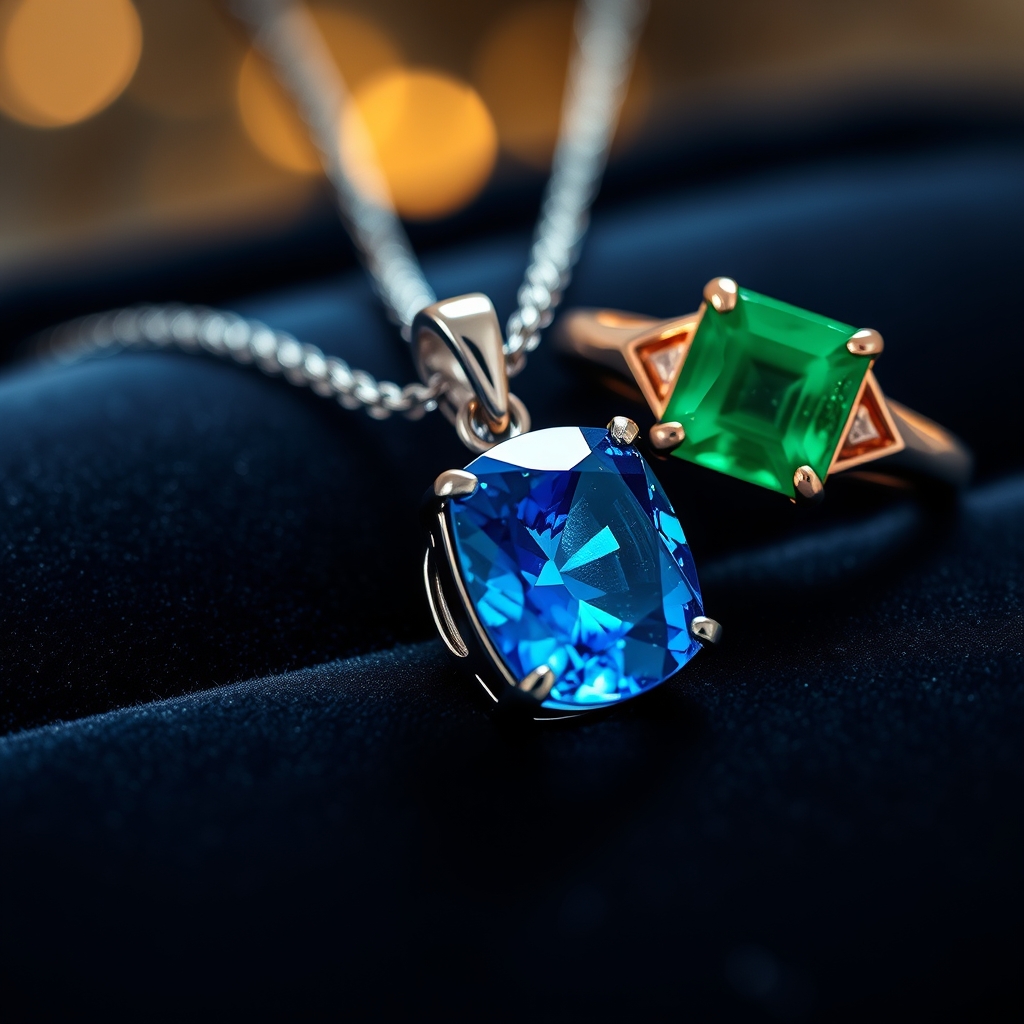
In a world where the gleam of a diamond necklace or the weight of a gold ring can feel like an unattainable dream, fine jewelry often exists as both a symbol of perfection and a reminder of its elusiveness. The allure of these pieces lies not just in their brilliance, but in the stories they tell—stories of craftsmanship, desire, and the quiet tension between aspiration and reality. Among these, sapphire pendants and emerald rings stand as particularly poignant examples, embodying the duality of flawless beauty and the subtle imperfections that make them uniquely human.
The Illusion of Flawlessness
From a distance, a sapphire pendant suspended against the skin appears as a perfect droplet of the sky, its deep blue hues untouched by time or blemish. The stone’s clarity and cut are meticulously designed to capture light in a way that feels almost supernatural, as if the pendant itself is a fragment of some celestial realm. Similarly, an emerald ring glows with an otherworldly green, its color so vivid it seems to pulse with life. These pieces are crafted to dazzle, to create an illusion of perfection that transcends the ordinary. Yet, this illusion is precisely what makes them so captivating. They represent an ideal—a vision of beauty that feels just beyond reach, like a mirage shimmering on the horizon.
This illusion is not accidental. Jewelers spend years mastering the art of cutting, setting, and polishing gemstones to achieve a level of perfection that feels almost divine. The symmetry of a well-cut sapphire or the depth of color in an emerald is the result of countless hours of labor, each facet a testament to human ingenuity and precision. But it is this very pursuit of perfection that also highlights its unattainability. No gemstone is truly flawless; even the most exquisite sapphire pendant or emerald ring carries within it tiny inclusions, minute imperfections that remind us of the natural world from which they came. These flaws do not diminish their beauty; rather, they add a layer of depth, a whisper of authenticity that makes each piece uniquely its own.
The Reality of Imperfection
It is in these imperfections that the true magic of fine jewelry reveals itself. A sapphire pendant with a faint internal fracture tells a story of geological forces, of time and pressure shaping the stone over millennia. An emerald ring with a slight variation in color becomes a conversation piece, a reminder that nature’s artistry is never uniform. These imperfections are not mistakes; they are signatures, proof of the stone’s journey from the earth to the wearer’s hand. They ground the piece in reality, transforming it from a mere object of desire into something far more meaningful—a tangible connection to the natural world and the hands that shaped it.
This tension between perfection and imperfection is what makes fine jewelry so compelling. It mirrors the human experience, where beauty often lies in the balance between aspiration and acceptance. A gold ring may symbolize eternal love, but it is the slight wear on its band that speaks of a life shared, of moments both ordinary and extraordinary. A pearl earring may gleam with an iridescent sheen, but it is the tiny irregularities in its surface that reveal its organic origins, its birth in the depths of the ocean. These nuances do not detract from the piece; they elevate it, imbuing it with a soul that mass-produced perfection could never achieve.
The Craftsmanship Behind the Mirage
The illusion of perfection in fine jewelry is not just a product of the gemstones themselves, but of the craftsmanship that brings them to life. A master jeweler does not merely set a stone; they coax its beauty into being, using techniques honed over generations to highlight its strengths and minimize its flaws. The art of lapidary, for instance, involves cutting and polishing gemstones to maximize their brilliance, a process that requires an intimate understanding of light, color, and geometry. Similarly, the setting of a stone—whether in a delicate platinum choker or a bold statement necklace—can transform its appearance, enhancing its natural beauty while creating a piece that feels both timeless and contemporary.
This craftsmanship is particularly evident in pieces like sapphire pendants and emerald rings, where the stone’s color and clarity are paramount. A well-cut sapphire will reflect light in a way that makes it appear to glow from within, while an emerald’s color can be subtly enhanced or softened depending on its setting. The choice of metal—whether the cool elegance of platinum or the warm richness of gold—further influences the piece’s overall impact, creating a harmonious balance between stone and setting. It is this attention to detail that allows fine jewelry to transcend its material value, becoming something far more profound: a work of art.
The Emotional Weight of Imperfection
Beyond their physical beauty, the imperfections in fine jewelry carry an emotional weight that resonates deeply with those who wear them. A vintage jewelry piece, for example, may bear the marks of its previous owners—scratches, patina, or repairs that tell a story of love, loss, or resilience. These signs of wear do not diminish the piece’s value; they enhance it, transforming it into a living artifact, a tangible link to the past. Similarly, a custom cufflink or handcrafted jewelry piece may carry the fingerprints of its creator, subtle reminders of the human touch that brought it into being.
This emotional connection is what sets fine jewelry apart from other forms of adornment. It is not merely about aesthetics or status; it is about meaning. A sapphire pendant gifted on a milestone anniversary becomes a symbol of enduring love, its imperfections a testament to the complexities of a shared life. An emerald ring passed down through generations carries the weight of family history, its flaws a reminder of the lives it has touched. These pieces are not just accessories; they are heirlooms, vessels of memory and emotion that transcend time.
The Mirage as a Mirror
Ultimately, the illusion of perfection in fine jewelry serves as a mirror, reflecting our own desires, aspirations, and vulnerabilities. We are drawn to the flawless gleam of a diamond necklace or the deep hue of a sapphire pendant because they represent an ideal—a vision of beauty that feels just beyond our grasp. Yet, it is in the imperfections, the subtle flaws and unique characteristics of each piece, that we find something far more valuable: authenticity. These imperfections remind us that beauty is not about perfection, but about the stories, the craftsmanship, and the emotions that give each piece its soul.
The next time you admire a piece of fine jewelry, whether it’s a gold ring glinting in the light or a pearl earring catching the eye, take a moment to look beyond the surface. Notice the tiny inclusions in the gemstone, the slight asymmetry in the setting, the patina that speaks of a life well-lived. These are not flaws to be overlooked; they are the very essence of what makes the piece extraordinary. In a world that often demands perfection, fine jewelry offers a quiet rebellion—a celebration of the imperfect, the unique, and the deeply human.