
The Gilded Confluence: How Sapphire Pendants and Diamond Necklaces Become the Duality of Opulence and Grace
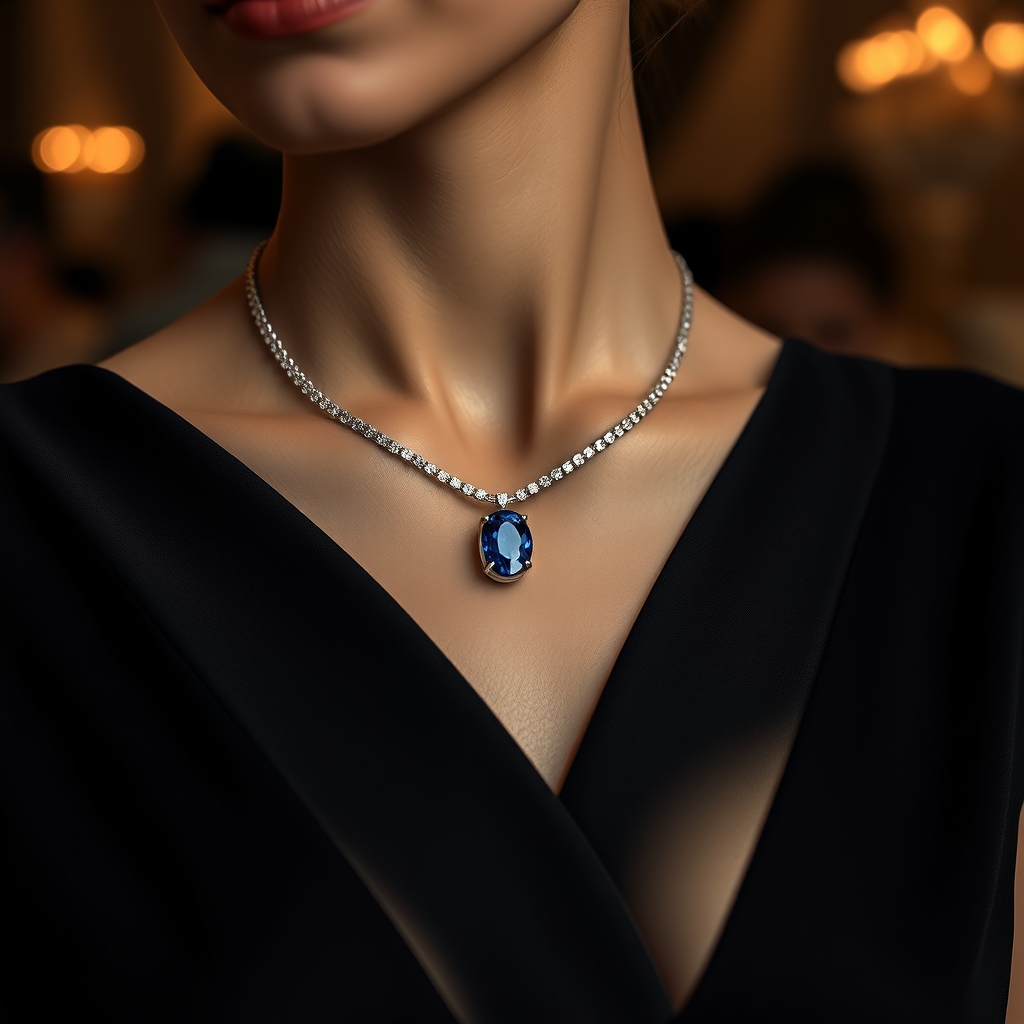
In the grand ballet of fine adornment, where each piece tells a story more profound than its glittering surface, there exists a delicate interplay between opulence and grace. This is the realm where sapphire pendants and diamond necklaces do not merely coexist but engage in a silent dialogue, crafting a narrative that transcends the boundaries of mere accessorizing. They become the duality that defines the essence of personal elegance—a confluence of bold brilliance and understated sophistication.
The Sapphire Pendant: A Whisper of Celestial Depth
The sapphire, with its mesmerizing blue hues, has long been revered as a gemstone of wisdom, nobility, and divine favor. Unlike the fiery allure of rubies or the verdant mystery of emeralds, sapphires carry a depth that feels almost celestial, as if each stone holds a fragment of the twilight sky. When set into a pendant, the sapphire becomes more than a jewel; it transforms into a focal point of quiet intensity, a statement that does not shout but resonates with the wearer’s inner strength.
A sapphire pendant, particularly one set in platinum or white gold, exudes an air of timeless elegance. It is the kind of piece that effortlessly transitions from a boardroom meeting to an evening soirée, its cool blue tones complementing both professional attire and glamorous gowns. The pendant’s design—whether minimalist or ornate—speaks volumes about the wearer’s personality. A simple solitaire sapphire on a delicate chain might reflect a love for understated luxury, while an intricately designed pendant with diamond accents could signify a penchant for bold, artistic expression.
The Symbolism of Sapphires in Modern Adornment
Historically, sapphires have been associated with royalty and protection. Ancient Persians believed the earth rested on a giant sapphire, its reflection coloring the sky. In medieval times, clergy wore sapphires to symbolize heaven, while nobility adorned themselves with the gem to attract divine favor. Today, sapphires continue to carry this legacy of significance, often chosen for engagement rings and heirloom pieces as symbols of loyalty, sincerity, and enduring love.
In the context of a pendant, the sapphire’s symbolism takes on a more personal dimension. It becomes a talisman, a reminder of one’s aspirations, values, or even a cherished memory. For some, it may represent a milestone achieved; for others, it could be a tribute to a loved one. The sapphire’s versatility in meaning is what makes it a cornerstone of fine jewelry, capable of adapting to the wearer’s evolving narrative.
The Diamond Necklace: A Symphony of Unyielding Brilliance
If the sapphire pendant is the whisper of elegance, the diamond necklace is its resounding chorus. Diamonds, with their unparalleled hardness and brilliance, have long been the ultimate symbol of enduring strength and eternal beauty. A diamond necklace, whether a delicate tennis bracelet-style piece or a bold, multi-strand statement, commands attention not through ostentation but through the sheer power of its presence.
The allure of a diamond necklace lies in its ability to elevate any ensemble with effortless grace. A single strand of diamonds can add a touch of sophistication to a little black dress, while a more elaborate design can transform a simple blouse and trousers into a look fit for a gala. The key to wearing a diamond necklace lies in understanding its role as a complement rather than a competitor to the wearer’s natural beauty. It is not about overshadowing but enhancing, not about dominating but harmonizing.
The Evolution of Diamond Necklaces Through the Ages
The history of diamond necklaces is as rich and varied as the gems themselves. In the 18th century, diamond necklaces became a staple of European aristocracy, often designed in elaborate patterns that mimicked the grandeur of royal courts. The infamous Affair of the Diamond Necklace, which rocked the French monarchy in the 1780s, underscored the gem’s association with power, scandal, and intrigue. By the 20th century, diamond necklaces had evolved into more accessible yet equally stunning designs, thanks to advancements in gem-cutting and setting techniques.
Today, diamond necklaces are celebrated for their versatility. Modern designs range from the classic solitaire pendant to avant-garde pieces that incorporate colored gemstones or unconventional settings. The rise of lab-grown diamonds has also democratized access to these timeless pieces, allowing more people to experience the joy of wearing a diamond necklace without compromising on ethics or quality.
The Alchemy of Combining Sapphire and Diamond
When a sapphire pendant and a diamond necklace come together, they create a visual and emotional alchemy that is greater than the sum of its parts. The cool, deep blue of the sapphire contrasts beautifully with the icy brilliance of the diamonds, resulting in a look that is both striking and harmonious. This combination is not just about aesthetics; it is about balance—balancing boldness with subtlety, tradition with modernity, and personal expression with timeless elegance.
Consider, for example, pairing a sapphire pendant with a delicate diamond tennis necklace. The sapphire draws the eye with its rich color, while the diamonds add a layer of sparkle that enhances the pendant’s allure. Alternatively, a bold, multi-strand diamond necklace can be anchored by a large sapphire pendant, creating a focal point that feels both regal and contemporary. The possibilities are endless, limited only by the wearer’s imagination and sense of style.
Styling Tips for the Modern Connoisseur
For those looking to incorporate both sapphire pendants and diamond necklaces into their jewelry collection, the key is to experiment with layering and proportion. Start with a statement sapphire pendant as the centerpiece, then add one or two diamond necklaces of varying lengths to create depth and dimension. For a more understated look, opt for a single diamond necklace paired with a small sapphire pendant, allowing the pieces to complement rather than compete with each other.
Color coordination is also essential. Sapphires come in a range of blue shades, from pale cornflower to deep navy, so choose a hue that complements your skin tone and wardrobe. Pair lighter sapphires with white gold or platinum for a fresh, modern look, or opt for yellow gold settings to enhance the warmth of deeper blue stones. When it comes to diamonds, consider the metal of your necklace’s setting—white gold or platinum will enhance the diamonds’ brilliance, while rose gold can add a romantic, vintage touch.
Fine jewelry is more than mere decoration; it is a language of self-expression, a way to communicate one’s identity, values, and aspirations without uttering a single word. The interplay between a sapphire pendant and a diamond necklace is a testament to this silent dialogue, a celebration of how two distinct elements can come together to create something truly extraordinary. Whether worn separately or in tandem, these pieces do not just adorn the body—they elevate the spirit, turning everyday moments into occasions worth remembering. In their brilliance, they remind us that true elegance is not about following trends but about crafting a style that is uniquely, unapologetically our own.